Reconstitution
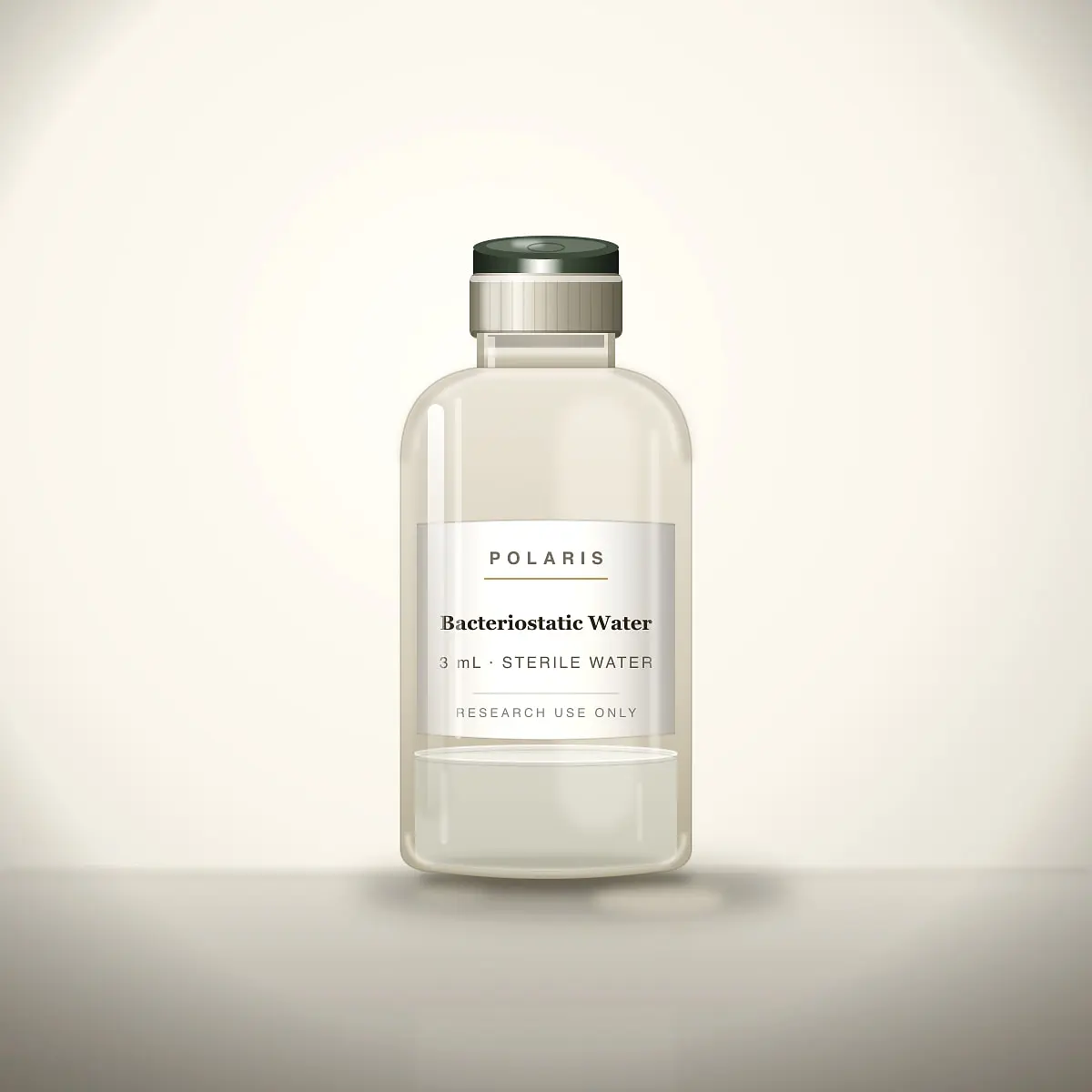
Bacteriostatic Water 3mL
$10
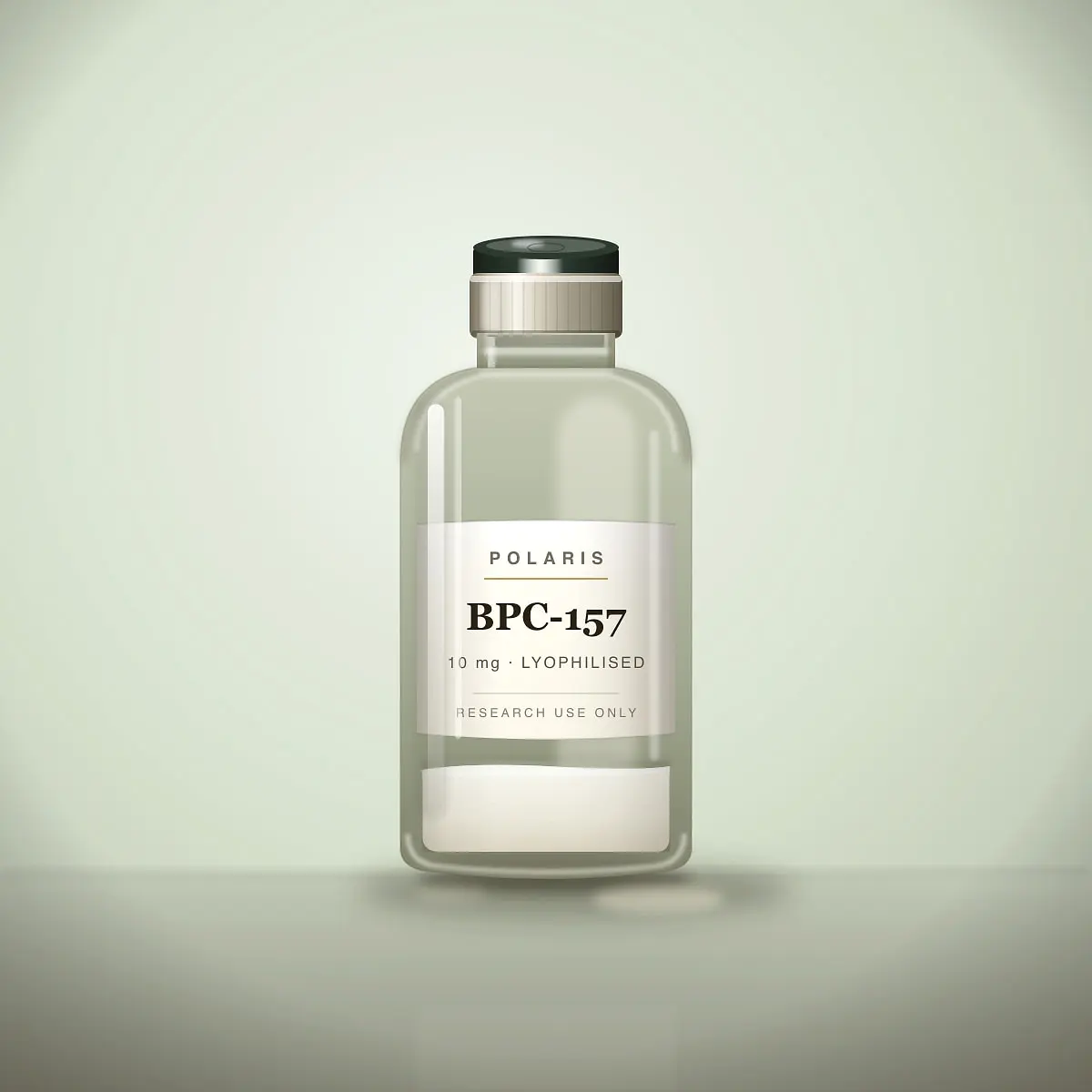
Recovery & Repair · 10mg
CAS 137525-51-0
Or 4 payments of $22.25 with Afterpay. Zip and Klarna are also available at checkout.
Applied automatically at checkout
The more vials in your order, the less each one costs. No code needed.
Peptide vials only. Bacteriostatic water is an add-on and stays at list price.
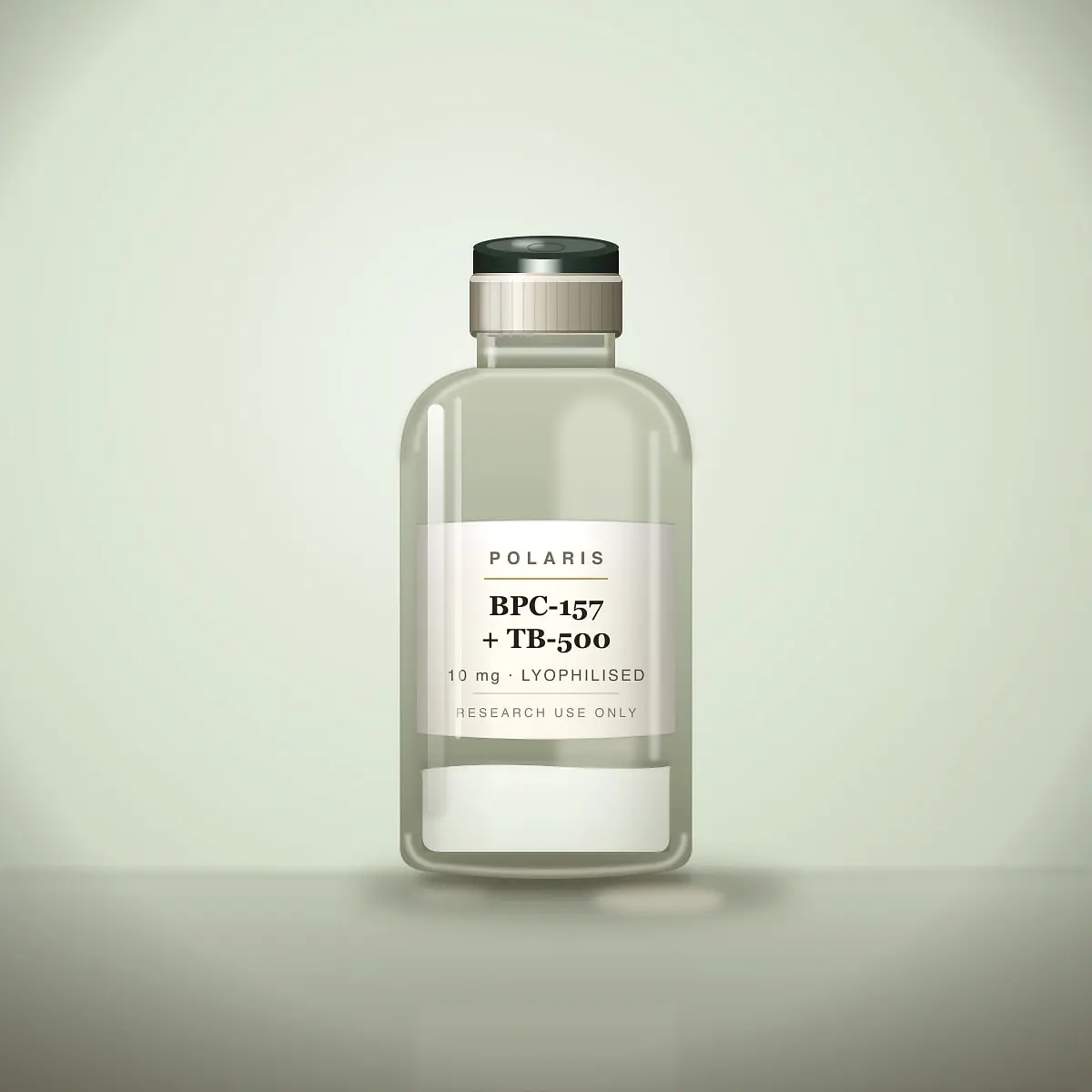
BPC-157, also written BPC 157 or BPC157, occasionally mistyped BP157 or BOC 157, and long-form as Body Protection Compound 157, is a pentadecapeptide (a fifteen-amino-acid chain) studied extensively in animal and cell models for tendon, ligament, soft-tissue, gut-barrier, and blood-vessel-signalling pathways. It is among the most discussed peptides in research circles and the single compound most often reached for in tissue-recovery investigation. The 10mg vial is the standard reference format.In the preclinical literature, BPC-157 is studied for how it engages tissue-repair signalling and angiogenesis, the formation of new blood vessels, which is why it sits at the centre of the recovery family. Much of the published research uses animal and in-vitro injury models to examine soft-tissue, tendon, and gut-lining pathways, and it is that breadth of models, rather than any single result, that keeps it central to the category.Researchers studying complementary recovery pathways often pair BPC-157 with TB-500; our BPC-157 + TB-500 blend vial covers both in a single unit, and the Klow and Glow blends fold BPC-157 into wider skin-and-repair combinations. Our Art of Pairing library guide explains the logic behind those combinations. The single-compound 10mg vial here is the clean reference format for studying BPC-157 on its own.Every 10mg vial ships lyophilised with an independently verified batch certificate at a guaranteed floor of ≥98% purity, verifiable on the batch verification page using the batch number on the label. Reconstitute with bacteriostatic water: add it slowly down the inside wall of the vial, swirl to dissolve, and never shake. Store the unopened vial at 2 to 8°C; once reconstituted, refrigerate the solution and do not refreeze it. CAS reference 137525-51-0.Buying BPC-157 in Australia is entirely domestic: every vial is dispatched from within Australia with free Australia Post Express shipping to all states and territories, no minimum spend, and tracking included. No customs, no international freight. Checkout takes card, PayPal, or PayID, each vial is sealed under argon, and a 24-hour reservation holds your stock from order. Supplied strictly as a research material for lawful laboratory and in-vitro use, not for human or veterinary consumption.
BPC-157 carries 236 indexed publications, 3 registered trials, 22,422 monthly readers on Wikipedia. Research activity sits at 36 papers in the past twelve months against 13 the year before.
Exact-name recovery peptide searches with comparison against blend products.
236 papers, 36 this year · 3 trials · 22,422 readers (-4%) · A tier
Prepared with care, sealed under argon, and stored at 2–8°C until dispatch. Reconstitute with Bacteriostatic Water before use. Full preparation and storage guidance included with your order.
Independent third-party research on reptides.co — not affiliated with Polaris Research. Research reference only, not medical advice.
BPC-157 10mg arrives sealed and research-ready, with a written preparation and storage card in every order. Prepare and store it as set out below, and use the reconstitution calculator to work out your concentration and draw volume before you begin.
Your BPC-157 10mg vial arrives securely packaged. Refrigerate it sealed at 2–8°C until you are ready to prepare.
Add Bacteriostatic Water slowly against the vial wall, then swirl gently. Never shake.
Once prepared, aliquot and freeze at −20°C. Avoid repeated freeze–thaw cycles.
“Pristine single vial, sealed and labelled clearly. Arrived two days after dispatch.”
“Fast dispatch with tracking and tidy, discreet packaging. Prep guide included as promised.”
“Second order and identical quality. The prep notes are clear enough for a first-timer.”
“Great vial and quick to ship. One star off only because the first tracking scan took a while.”
“Well sealed, clearly labelled, and reasonably priced. Support answered promptly when I asked about storage.”
Educational and product-logistics information only. Nothing here is medical advice or a therapeutic claim.
What research-grade BPC-157 actually costs in Australia, priced per vial and per milligram, plus where the BPC-157 and TB-500 blend fits.
Read →Two tissue-repair peptides compared, where they overlap, where they differ, and which one we actually stock.
Read →How to keep BPC-157 at its best from arrival to last aliquot, lyophilised, reconstituted, and everything in between.
Read →Also Searched As·BPC-157 is also searched as BPC 157, BPC157, BP157, BOC 157, Body Protection Compound 157, BPC-157 peptide, BPC 157 peptide.
BPC-157 appears in 240 indexed publications going back to 1992, including 39 in the past twelve months. 4 registered trials appear on ClinicalTrials.gov.
Publications per year. The final bar is the current year, still in progress.
| 2015 | 5 |
|---|---|
| 2016 | 8 |
| 2017 | 11 |
| 2018 | 9 |
| 2019 | 6 |
| 2020 | 11 |
| 2021 | 19 |
| 2022 | 12 |
| 2023 | 10 |
| 2024 | 5 |
| 2025 | 19 |
| 2026 | 33 |